
Plumber Approved Flushable Wipes for Septic Systems: The 2026 Buyer’s Guide
What if the very product meant to keep you fresh is actually a $1,000 plumbing bill waiting to happen? It's a valid fear, especially when professional fees for clearing severe blockages can easily reach four figures. You want the comfort of a wet wipe but dread the thought of a fatberg clogging your drain field. Finding genuine plumber approved flushable wipes for septic systems feels impossible when "flushable" labels seem to contradict every warning from your local septic pro.
We hear you, and we're here to clear the pipes. You deserve a clean that doesn't compromise your home or the planet. In this guide, you'll discover the technical standards like the IWSFG 2023 certification and the WIPPES Act of March 2026 that finally separate marketing hype from septic safety. We'll show you why 100% plant-based fibers are the key to rapid disintegration and how you can maintain a healthy septic system without giving up your hygiene routine. It's about finding a solution that's sustainable, effective, and safe for your plumbing. Simple as that.
Key Takeaways
- Decode the difference between industry labels and the strict IWSFG utility standards that wastewater pros actually trust.
- Discover why 100% plant-based, plastic-free construction is the secret to plumber approved flushable wipes for septic systems.
- Protect your home with the "One-Wipe Rule" and simple flushing habits that prevent costly septic backups and fatbergs.
- Navigate the 2026 WIPPES Act labeling changes to confidently pick products that protect your pipes and the planet.
- Find out how choosing a truly dispersible wipe creates a ripple effect of good through our Wipe for a Cause mission.
The Septic-Safe Dilemma: Why Plumbers Are Skeptical of Flushable Wipes
Plumbers aren't just being difficult when they tell you to stop flushing wipes. They're the ones answering the frantic calls when a $1,000 backup floods a basement. In 2026, the definition of "septic-safe" has evolved. It no longer just means a wipe can clear the toilet bowl. True safety requires the material to disintegrate almost instantly. Most traditional wipes use synthetic binders, essentially tiny plastic threads, that hold the fabric together even under pressure. These fibers are the primary cause of fatbergs. These are massive, congealed lumps of grease and non-biodegradable waste that wreak havoc on infrastructure. The U.S. Senate passed the WIPPES Act in March 2026 to address this exact issue, signaling a major shift toward honest labeling standards.
While municipal sewers use high-powered pumps to move waste, your home septic system relies on gravity and biology. It's a closed loop that can't handle stubborn materials. Finding genuine plumber approved flushable wipes for septic systems means looking for products that respect this delicate balance. Simple as that.
How Septic Systems Process Waste
Your septic tank works like a living organism. It separates waste into three distinct layers. The top is the scum layer, filled with oils and floating solids. The middle is the liquid effluent. The bottom is the heavy sludge. When you flush a wipe that doesn't disperse, it often gets trapped in the scum layer. These trapped wipes can clog internal plumbing, septic systems and public sewer systems by blocking the inlet baffle, which is the pipe where waste enters the tank. Even worse, synthetic wipes can kill the beneficial bacteria needed to break down solids. When these bacteria die, your tank fills up faster, leading to more frequent pumping and higher costs.
The Plumber’s Perspective: Why They Say 'No'
A typical service call to clear a wipe-related clog can cost anywhere from $300 to over $1,000. Plumbers often perform what they call a "tug test" on the job. They grab a wet wipe and pull. If the material stretches or resists, they know it's a pipe-killer. They want to see materials that shred easily, like traditional toilet paper. This is why wastewater professionals prioritize "dispersibility" over "flushability" labels. To a plumber, a wipe is only truly safe if it loses its structural integrity the moment it hits the water. We believe in providing a clean that protects your home and supports the planet. Our commitment to high-impact hygiene means choosing materials that work with your plumbing, not against it.
Evaluating 'Plumber Approved' Standards: IWSFG vs. INDA
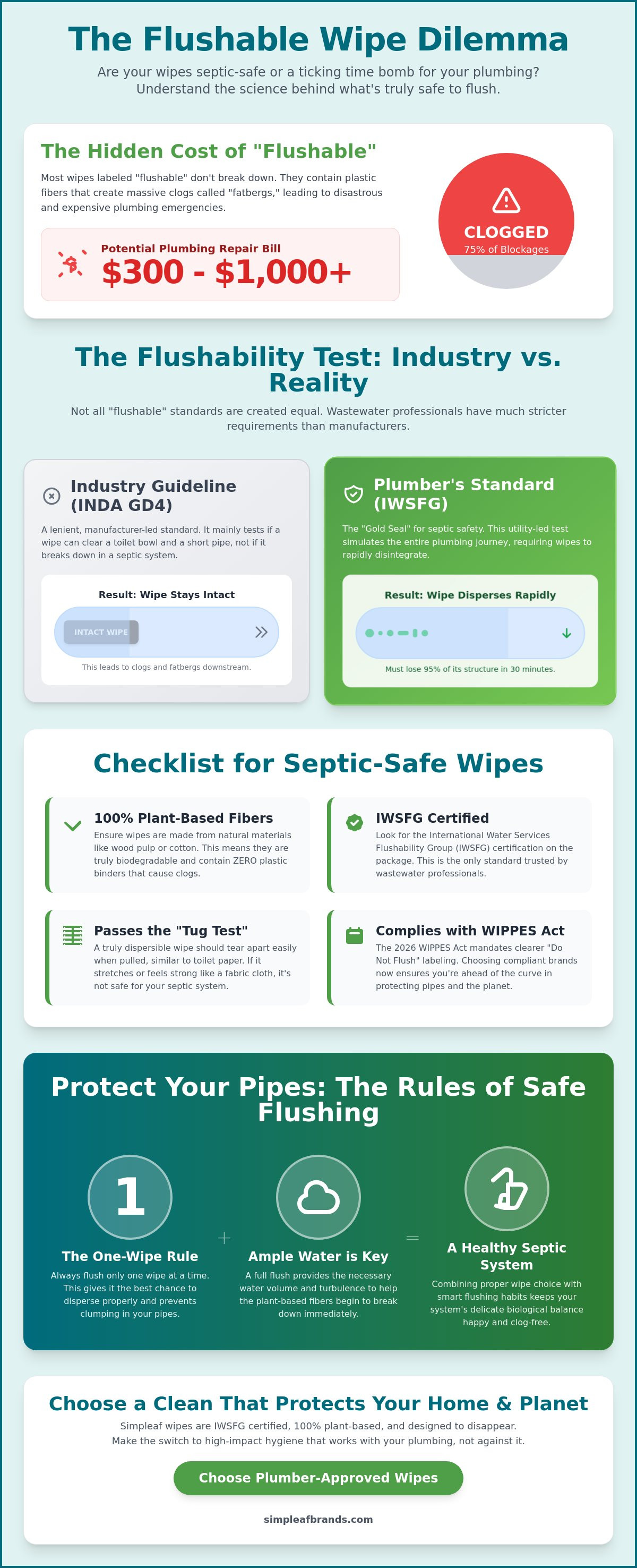
The term "plumber approved" isn't a legal certification. It's a performance standard that homeowners rely on to avoid disaster. When you're looking for plumber approved flushable wipes for septic systems, you're actually looking for products that pass two very different types of tests. The first is the INDA (Association of the Nonwoven Fabrics Industry) GD4 guidelines. These are industry-led standards. They focus on whether a wipe can clear a standard toilet and move through a pipe. While helpful, many wastewater professionals find them too lenient for the unique needs of a home septic tank.
That's where the International Water Services Flushability Group (IWSFG) comes in. This utility-led coalition sets much higher bars for safety. They use the "Slosh Box" test to simulate the journey from your bathroom to the tank. Scientists place a wipe in a rocking container of water to mimic the mechanical stress of plumbing. If the wipe doesn't lose its strength and start to fall apart quickly, it fails. The U.S. Environmental Protection Agency (EPA) also emphasizes the need for materials that break down rapidly to ensure that the toilets, plumbing, sewer systems and septic systems will continue working properly. It's about data, not just marketing. Simple as that.
The IWSFG 2020 Standard Explained
The IWSFG 2020 standard is often called the "Gold Seal" for septic owners. To pass, a wipe must show significant disintegration within just 30 minutes. Specifically, at least 95% of the wipe must break into pieces smaller than 25mm. This standard also strictly prohibits the use of plastic fibers or regenerated cellulose that can't biodegrade. By meeting these rigorous criteria, a product ensures it won't linger in your tank or clog your inlet baffle. Choosing a wipe that meets these utility-led specs is a proactive way to protect your home's infrastructure.
Reading the Fine Print on the Packaging
In the cleaning aisle, "greenwashing" is a real problem. Some brands use the word "flushable" even if their products contain synthetic binders that take years to decompose. You have to be a savvy shopper. Always look for keywords like "Plastic-free," "100% Plant-based," and "Dispersible." These terms indicate that the material is designed to shred rather than stretch. If you see a "Do Not Flush" symbol, even on a product that claims to be natural, trust the symbol over the sales pitch. For a truly safe experience, consider exploring plant-based hygiene solutions that prioritize both your comfort and your plumbing's health. We believe hygiene should be a force for good, starting with the pipes in your own home.
Buying Guide: Features of a Truly Septic-Safe Flushable Wipe
Picking the right product shouldn't feel like a gamble with your home's infrastructure. While we've discussed the rigorous IWSFG standards, you need a practical checklist to use while shopping. To find genuine plumber approved flushable wipes for septic systems, you must look past the colorful branding on the front. Flip the pack over. Inspect the material list and the ingredient panel. A truly safe wipe balances the strength needed for a refreshing clean with the fragility required to protect your drain field. It's about finding that sweet spot where durability meets dispersibility. Simple as that.
Size and thickness also play a critical role in pipe safety. A wipe that is too large or excessively thick can struggle to clear the tight bends in your home's plumbing, even if it's made of good materials. You want a product that feels substantial enough for the job but begins to shred the moment you apply water and movement. This ensures the wipe moves through your inlet baffle without creating a snag for other waste to catch on.
The Material Science: Cellulose vs. Plastic
Polyester and polypropylene are the ultimate enemies of a healthy septic system. These plastic fibers are designed for longevity, not disintegration. They don't break down; they just tangle and trap grease. Instead, prioritize 100% plant-sourced fibers like wood pulp or bamboo. These materials are naturally cellulose-based. This means they lose their structural integrity quickly when submerged in your tank's effluent. For a deeper look at the top-rated options this year, explore our guide on the Best Flushable Wet Wipes of 2026: A Guide to Guilt-Free Hygiene. Choosing 100% plant-based fibers is a simple way to ensure your hygiene routine doesn't leave a permanent footprint in your pipes.
Septic-Friendly Ingredients
Your septic tank is a living ecosystem. It relies on billions of tiny bacteria to digest waste and keep the system flowing smoothly. Harsh chemicals like alcohol, parabens, or specialized antibacterial agents can wipe out these helpful microbes. When this bacterial balance is disrupted, solids build up faster, leading to more frequent pumping and potential system failure. Fragrance-free and pH-balanced options are your best bet for a healthy home. By choosing plant-based ingredients, you provide a gentle touch for your skin while ensuring every wipe returns to the earth without harming your septic system's delicate balance. This commitment to purity protects your family and your plumbing simultaneously.
Septic Maintenance: How to Use Wipes Without Risk
You've done the research and found plumber approved flushable wipes for septic systems. That is a massive win for your home. However, even the most dispersible wipe needs a little help from you to navigate your plumbing successfully. Maintenance is about more than just the product; it's about the process. Think of your septic tank as a living ecosystem that requires balance to stay healthy. When you follow a few smart habits, you ensure that your refreshing clean doesn't lead to an expensive service call. Simple as that.
The most important habit to adopt is the "One-Wipe Rule." Even if a material is designed to shred, flushing a large cluster of wipes at once creates a physical barrier that water cannot easily penetrate. This can lead to a snag at the inlet baffle of your tank. If you notice gurgling sounds from your pipes, slow-draining sinks, or patches of lush, green grass over your drain field, your system might be struggling with solids. If your system ever experiences a backup, stop flushing everything except water until a professional clears the line. During these times, a discrete bin is your best friend.
Optimizing Your Flush
Modern low-flow toilets are great for the environment, but they present a challenge for moving solids. Since 2016, many high-efficiency toilets use only 1.28 gallons per flush. This is significantly less force than older five-gallon models. To help a wipe move through the pipes, give your system a moment to recover between flushes. If you're unsure about a new brand, try the "Jar Test" at home. Place a single wipe in a jar of water and shake it for 30 seconds. A truly septic-safe wipe will begin to fall apart into small, wispy fibers. If it stays whole, it belongs in the trash, not your tank.
Long-term Septic Health
Wipes of any kind will eventually contribute to the sludge layer at the bottom of your tank. While plant-based fibers break down much faster than synthetics, they still require the bacteria in your tank to do their job. Most experts recommend a professional pumping every three to five years to prevent sludge from reaching your outlet pipe. Avoid using "miracle" septic additives, which can actually stir up solids and send them into your drain field. Instead, focus on high-quality paper products and sustainable materials. For more tips on maintaining a healthy home, check out Simpleaf: The Complete Guide to Sustainable Hygiene and Home Care. Ready to upgrade your routine? Shop our plant-based flushable wipes and feel the difference of a truly clean conscience.
Why Simpleaf Flushable Wipes Are the Plumber-Approved Choice
Simpleaf isn't just another brand on the shelf. We're a socially conscious companion dedicated to making your life easier and the planet cleaner. We believe that hygiene should be empowering, not a source of stress for your home. By focusing on 100% plant-based, plastic-free construction, we've created a product that respects the delicate biology of your septic tank. Our wipes don't just sit in the scum layer; they're designed to move and break down. Finding plumber approved flushable wipes for septic systems is finally easy. Simple as that.
Our commitment to transparency means you never have to guess what's in our products. As of May 2026, a single 50-count pack of our unscented wipes is priced at just $3.99, making high-quality, septic-safe hygiene accessible for everyone. We avoid the synthetic binders that lead to fatbergs and expensive pipe jetting. Instead, we use natural fibers that lose their strength the moment they hit the water. This ensures your plumbing stays clear and your septic system functions exactly as it should. It's a modern solution for an active, mobile lifestyle.
You're part of something bigger when you choose Simpleaf. Through our signature Wipe for a Cause mission, every purchase helps us provide hygiene essentials to those in need. We bridge the gap between functional necessity and social responsibility. You get a fresh, reliable clean, and the community gets a helping hand. It's about making a positive impact with every flush, ensuring that your daily habits contribute to a better world without risking a $1,000 plumbing bill. Our wipes are built for the way you live today.
The Simpleaf Technical Advantage
We engineered our wipes to exceed the standard dispersibility tests mentioned earlier in this guide. While some brands barely meet the industry-led INDA guidelines, we aim for the utility-led IWSFG standards. Our material is specifically designed to shred into tiny pieces within 30 minutes of contact with water. We also ensure our formula is free from harsh chemicals that could disrupt your tank's enzymes. For more tips on keeping your home safe and sustainable, read The Ultimate Guide to Eco-Friendly Cleaners: Safe, Simple, and Effective in 2026. We prioritize your infrastructure as much as your comfort.
Simple as That: Peace of Mind for Septic Owners
Homeowners across the country have made the switch to Simpleaf because they value honesty. Our packaging clearly highlights our 100% plant-based fibers and plastic-free promise. This transparency has earned the trust of septic owners who were once afraid to use any wet wipe. You don't have to choose between feeling refreshed and protecting your drain field. With our fast-dispersing design and commitment to purity, you can have both. Ready to experience a better clean? Shop Simpleaf Flushable Wipes and protect your plumbing today! It's the smartest move you can make for your home and the environment.
Protect Your Pipes and Your Peace of Mind
Choosing the right hygiene products doesn't have to be a guessing game anymore. By understanding the March 2026 WIPPES Act and prioritizing utility-led IWSFG standards, you can finally enjoy a refreshing clean without the fear of a $1,000 septic disaster. You've learned that true safety lies in 100% plant-based materials that shred quickly. Finding genuine plumber approved flushable wipes for septic systems means choosing products engineered for rapid dispersibility rather than plastic-filled durability. Simple as that.
At Simpleaf, we believe your hygiene routine should be a force for good. Our wipes are 100% plant-based and plastic-free; they're specifically designed to lose structural integrity within 30 minutes of flushing. When you choose us, you're not just protecting your home's infrastructure; you're supporting our Wipe for a Cause mission to help communities in need. It's a small change that makes a massive impact on your home and the world around you. Feel refreshed, stay sustainable, and keep your septic system thriving for years to come.
Switch to Simpleaf Flushable Wipes: Plumber-Friendly & Septic-Safe
Frequently Asked Questions
Are flushable wipes actually safe for septic systems?
Yes, but safety depends entirely on how fast the material disintegrates. Most wipes don't break down quickly enough for gravity-fed septic tanks. Truly safe options must be 100% plant-based and plastic-free to avoid clogging the inlet baffle. Look for products that meet the IWSFG 2023 standards, which require wipes to shred into tiny pieces within 30 minutes of flushing. Simple as that.
How many flushable wipes can I flush at once in a septic system?
You should only flush one wipe at a time to prevent clogs. Even when using plumber approved flushable wipes for septic systems, volume is a major risk factor. Flushing multiple wipes creates a thick mass that low-flow toilets, which often use just 1.28 gallons per flush, can't move efficiently. Wait a moment between flushes to ensure the line is completely clear before the next use.
What happens if a wipe doesn't dissolve in my septic tank?
Undissolved wipes either float in the scum layer or sink into the sludge, eventually blocking the outlet pipe. This leads to sewage backing up into your home or flooding your drain field. According to the NACWA, non-dispersible wipes contribute to $441 million in annual utility operating costs. In a home septic system, these stubborn fibers cause premature tank failure and expensive emergency repairs.
Do plumbers really approve of any flushable wipes?
Most plumbers are skeptical, but they generally approve of materials that pass a mechanical "tug test" by shredding easily. They trust products that mimic the behavior of traditional toilet paper rather than fabric. Plumbers prioritize dispersibility over marketing labels. If a wipe is made of 100% cellulose and contains no synthetic binders, it meets the technical requirements pros look for to prevent service calls.
How can I tell if a wipe contains plastic fibers?
Check the ingredient list for polyester, polypropylene, or generic "synthetic fibers." You can also test a wipe by stretching it. If the material stretches like a t-shirt instead of tearing like paper, it contains plastic binders. Since March 2026, the WIPPES Act mandates clearer "Do Not Flush" symbols on products that contain these non-dispersible materials, making it easier for you to shop with confidence.
Will flushable wipes cause my septic tank to need pumping more often?
Yes, any solid waste that enters the tank adds to the sludge layer at the bottom. While plumber approved flushable wipes for septic systems made from wood pulp break down much faster than synthetics, they still contribute to total solid volume. If your household uses wipes daily, consider moving your pumping schedule from every five years to every three years to maintain a healthy bacterial balance.
What is the difference between biodegradable and flushable wipes?
Biodegradable means a product eventually breaks down in nature, while flushable means it disintegrates rapidly in water. A wipe can be biodegradable but still take months to decompose, which is far too slow for your pipes. For septic safety, you need a wipe that is both biodegradable and highly dispersible. This ensures it loses its structural strength the moment it enters your plumbing system.
Can I use baby wipes in a septic system if they say they are natural?
No, you should never flush baby wipes regardless of their ingredients. Even natural or organic baby wipes are engineered for strength to handle messy cleanups and usually contain reinforced fibers. They are specifically designed not to break down when wet. Flushing just one can snag a pipe or block your septic inlet. Always dispose of these in a trash bin to keep your system fresh.