
Are Flushable Wipes Really Flushable in 2026? The Honest Truth for Your Plumbing
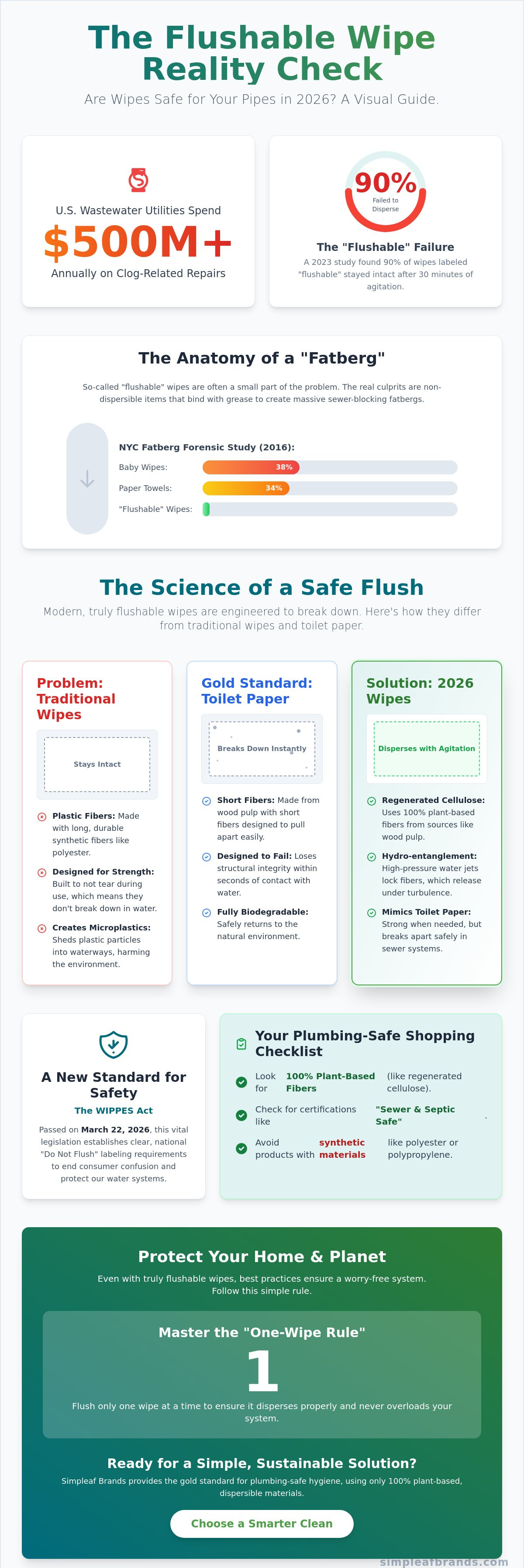
U.S. wastewater utilities spend over $500 million every year on repairs directly related to clogs caused by non-dispersible wipes. This staggering cost stems from a single, confusing question: are flushable wipes really flushable 2026? You want a fresh hygiene routine that feels good, but you don't want to risk a plumbing disaster or add to the plastic waste in our oceans. It's frustrating to see "flushable" on a label when a 2023 study by the Water Environment Federation revealed that 90% of those wipes stayed fully intact after 30 minutes of agitation.
We believe hygiene should be simple and sustainable. We're here to reveal the scientific reality behind those labels so you can protect your pipes and the planet. You'll learn how to identify wipes that actually disperse, understand the impact of the WIPPES Act passed on March 22, 2026, and get a clear checklist for your next shopping trip. You deserve peace of mind during your daily routine. Simple as that.
Key Takeaways
- Learn how regenerated cellulose and hydro-entanglement technology create wipes that break down quickly without losing strength.
- Discover the simple checklist to help you decide if are flushable wipes really flushable 2026 before they ever reach your toilet.
- Master the "One-Wipe Rule" to protect your home plumbing and ensure a refreshingly clear sewer system.
- Understand why "biodegradable" labels can be misleading and how to choose products that are truly safe for the planet.
- Explore how your daily hygiene routine can join a larger movement for global impact through our Wipe for a Cause initiative.
The 2026 Reality Check: Why the Flushable Debate Still Rages
To understand the current state of hygiene, we must define what "flushable" actually means. It is not a suggestion. It is the physical ability of a product to pass through your home plumbing and municipal sewer systems without causing a blockage. As we look at the question, are flushable wipes really flushable 2026, we see a clear divide between old-school plastic wipes and new dispersible fibers. True flushability is a rigorous technical standard. It requires a product to break down under the mechanical stress of a sewer line. Your choice to use dispersible wipes protects our shared water systems and supports a cleaner planet for everyone. Simple as that.
The Infamous Fatberg: How Wipes Got a Bad Reputation
Fatbergs became a global crisis when non-dispersible items began binding with fats, oils, and grease in city sewers. These rock-hard masses cause massive backups and infrastructure damage. While "flushable" products often take the heat, the data tells a different story. A 2016 forensic study in New York City found that fatbergs were composed of 38% baby wipes and 34% paper towels. Only 2% were wipes actually labeled as flushable. Despite this, the impact is real. Non-dispersible wipes account for as much as 40% of all blockages in municipal sewer systems. U.S. wastewater utilities now spend over $500 million annually on repairs and maintenance for these clogs. Looking at the history of wet wipes, it's clear that the lack of national standards led to this confusion. This is why the WIPPES Act, which passed the U.S. Senate on March 22, 2026, is so vital for establishing clear labeling requirements.
Why Toilet Paper is the Gold Standard for Flushing
Toilet paper works because it's designed to fail. In the industry "slosh test," standard TP loses its structural integrity within seconds of hitting the water. Its short fibers pull apart easily under minimal mechanical stress. Traditional wet wipes are the opposite. They often use long, plastic-reinforced fibers to ensure they don't tear during use. A 2023 study by the Water Environment Federation found that 90% of wipes marketed as flushable remained fully intact after 30 minutes of agitation. This strength is the enemy of your plumbing. Modern 2026 wipes aim to mimic the dispersibility of toilet paper. We believe hygiene should be a refreshing experience that doesn't compromise our pipes. If a wipe doesn't break down into small pieces quickly, it's just a sturdy piece of trash hiding in your system. Choose wipes that prioritize movement and purity over permanent strength. This commitment to dispersibility is the only way to answer yes when wondering are flushable wipes really flushable 2026.
The Science of Dispersibility: How Modern Wipes Break Down
The answer to are flushable wipes really flushable 2026 depends entirely on the science of the fiber. High-quality wipes in 2026 have moved away from plastic binders. They now utilize regenerated cellulose. This material comes from natural plant sources like wood pulp or bamboo. It provides the refreshing strength you need for a clean feeling but dissolves when it hits the swirling water of your toilet. This is achieved through a process called hydro-entanglement. High-pressure water jets interlock the fibers into a tight web. This creates a fabric that is sturdy in your hand but loses its grip under the mechanical stress of plumbing turbulence. Unlike old-fashioned wipes, these modern fibers don't just sit in the pipes. They actively pull apart. Choosing a sustainable hygiene solution ensures your routine is both effective and socially responsible. Simple as that.
Plant-Based Fibers vs. Synthetic Plastics
Synthetics like polyester and polypropylene are the real villains in our sewers. These plastic polymers are designed to last for decades. They don't break down; they just shred into microplastics that eventually leach into our oceans. Many municipal authorities are Debunking the 'flushable wipe' myth because so many brands still hide plastic in their "flushable" labels. 100% plant-based materials are different. They mimic the behavior of organic wood pulp found in toilet paper. They are biodegradable and naturally dispersible. This means they return to the earth without leaving a trace of plastic behind. It is a simple shift that makes a massive impact on our environment and our infrastructure.
Understanding the Dispersibility Standard
Dispersibility is the physical breakup of a wipe into small, individual fibers. It is the core requirement for any safe product. Manufacturers use the INDA/IWSFG GD4 guidelines to prove their products are safe. These aren't just suggestions. They are rigorous tests. Engineers simulate the journey from your bathroom to the wastewater plant. They use "slosh boxes" to mimic the movement of water in a pipe. A wipe must break into pieces small enough to pass through a 12mm screen within a specific timeframe. This ensures the fibers won't snag on a tree root or a rough pipe joint. When a product meets these 2026 standards, you can feel confident in your hygiene routine. It's clean, safe, and simple. Simple as that.
Labels vs. Reality: Identifying Truly Safe Wipes
Reading a label shouldn't feel like solving a puzzle. When you ask are flushable wipes really flushable 2026, you're looking for a simple truth. Unfortunately, many brands use "flushable" as a marketing buzzword rather than a technical guarantee. To protect your home, you need to look past the front of the pack. Check the back for the "Do Not Flush" symbol, a small icon of a person throwing a wipe in the trash. If that symbol is there, believe it. Your pipes will thank you. You can even perform a DIY "Mason Jar Test" at home. Drop a single wipe into a jar filled with water and shake it for 60 seconds. A truly dispersible wipe will begin to fall apart into small fibers. If it stays whole, it belongs in the bin. Simple as that.
Biodegradable vs. Flushable: The Crucial Difference
Confusion often arises between "biodegradable" and "flushable." These terms are not interchangeable. Biodegradability is a chemical process where bacteria break down materials over several months. Flushability is a physical process that must happen in minutes. For example, our Ultimate Guide to Biodegradable Face Wipes explains how high-quality skin products break down in a compost pile, but those same wipes would cause a massive clog in your sewer line. Face wipes are built to be tough; toilet wipes must be built to dissolve. Using the wrong one is a costly mistake for your plumbing and the ethical cleanliness of our water systems.
Certifications You Can Trust in 2026
Trust third-party testing over brand claims. The International Wastewater Services Flushability Group (IWSFG) provides the most rigorous seal of approval. Their standards are far stricter than the older INDA guidelines. Science backs this up. In The Case Against Flushable Wipes, researchers highlight a Ryerson University study that tested 101 different products. Not a single wipe passed the disintegration test at that time. However, the "Sewer Safe" label has evolved in 2026 to be more transparent, following the passage of the WIPPES Act in March. Look for the IWSFG logo to ensure your hygiene routine supports a clean home and a healthy planet. We're committed to this transparency because we believe in a refreshing experience that's good for everyone. Every choice you make is an opportunity to Wipe for a Cause and protect our shared infrastructure.
Protecting Your Home: Best Practices for Worry-Free Flushing
Your home's plumbing is a delicate ecosystem. Even with the best modern technology, the answer to are flushable wipes really flushable 2026 often comes down to how you use them. We advocate for the "One-Wipe Rule." It's a simple concept: flush only one wipe at a time. Most household clogs aren't caused by a single failure of a product to disperse. They happen because of volume. When multiple wipes enter the line together, they can bunch up before they have a chance to meet the water turbulence needed for breakdown. Think of it as keeping the path clear for a refreshing, worry-free routine. Simple as that.
Before you flush, consider the age of your pipes. Homes built before the 1975 transition to PVC often have cast iron or clay sewer lines. Over decades, these pipes develop rough interior surfaces and "snags" where even toilet paper can catch. Modern PVC piping is much smoother and more forgiving. If you're living in a charming historic home, you might choose to be more cautious. Similarly, low-flow toilets use significantly less water per flush. This means there's less force to push solids through the main line. A second "clearing flush" can be a smart move to ensure everything reaches the municipal system safely. Join our mission for a cleaner planet and shop our plumbing-safe wipes today.
Septic System Safety: A Deep Dive
Septic tanks rely on a balance of aerobic and anaerobic bacteria to digest solids. Traditional wipes with synthetic binders are like plastic rocks to these bacteria. They won't touch them. However, 100% plant-based fibers are organic matter. While they still require time to settle in the tank, they are far more compatible with the natural decomposition process. Always look for a "Septic-Safe" certification, which is a higher bar than standard sewer-safe labels. It ensures the fibers won't interfere with your tank's drainage field or cause expensive backups in your yard.
The Golden Rules of Proper Disposal
Safe flushing requires a bit of mindfulness. If you follow these simple guidelines, you can enjoy the comfort of a wet wipe without the fear of a plumbing bill:
- Check for root intrusions: Never flush wipes if you have known tree root issues. Roots seeking water create a "web" inside pipes that catches any solid material, leading to a 100% chance of a blockage.
- Use high-volume flushes: Ensure your toilet is performing a full flush to provide the mechanical stress needed to move fibers along.
- When in doubt, bin it: If you're undergoing plumbing repairs or your system is running slowly, choose the trash can. It's a small sacrifice for long-term peace of mind.
By following these steps, you protect your home and support the health of our shared water infrastructure. It's about being a responsible neighbor while maintaining your personal comfort. Simple as that.
Simpleaf Brands: The Gold Standard for Plumbing-Safe Hygiene
We believe that high-quality hygiene should never come at the cost of your home's infrastructure or the health of our planet. When you ask are flushable wipes really flushable 2026, you're looking for a product that honors its promise. Simpleaf Brands doesn't just meet industry standards; we exceed them. Our wipes are crafted with a deep sense of social responsibility, ensuring that your daily routine is both refreshing and ethically clean. We've eliminated the synthetic binders and plastic polymers that plague municipal sewers. Instead, we've embraced a design that prioritizes movement and rapid dispersibility. It is hygiene with a heart. Simple as that.
Choosing the right product means looking for 100% plant-based construction. Our wipes are engineered to be the best flushable wet wipes of 2026 because they cater to both sensitive skin and sensitive plumbing. By using natural fibers that mimic the behavior of organic wood pulp, Simpleaf Brands provides a solution that feels like a luxury but acts like a responsible choice. You don't have to choose between a fresh feeling and a clear conscience. We've made it simple to have both.
Engineered for Dispersibility
Our secret lies in the quality of our materials. Simpleaf Brands uses premium wood pulp and regenerated cellulose to create a fabric that is strong enough for use but weak enough to break down in water. Every batch undergoes rigorous stress-testing to ensure it meets the highest 2026 dispersibility guidelines. We simulate the high-turbulence environment of modern sewer lines to guarantee our fibers pull apart quickly. This prevents the snagging and bunching that leads to household clogs. For a deeper look at how we source our materials, explore our Complete Guide to Sustainable Hygiene. We're transparent about our process because we have nothing to hide.
Social Impact: Clean Body, Clean Conscience
Every purchase you make is a step toward a better world. Through our signature "Wipe for a Cause" mission, Simpleaf Brands bridges the gap between personal care and global hygiene access. A portion of the proceeds from every 50-count pack sold goes directly to charitable partnerships that provide clean water and hygiene education to communities in need. We aren't just selling a product; we're building a movement. When you choose Simpleaf Brands, you're joining a community of active, socially conscious individuals who care about humanity as much as they care about their own comfort. It's a refreshing approach to business that puts people and the planet first. We invite you to join us in making a real impact, one wipe at a time. Simple as that.
Refresh Your Routine with Confidence
Choosing a hygiene routine shouldn't feel like a gamble for your home. You now have the tools to distinguish between misleading plastic-reinforced wipes and truly dispersible plant-based fibers. By looking for the IWSFG seal and following the "One-Wipe Rule," you're making a choice that protects your pipes and respects our shared water infrastructure. The answer to are flushable wipes really flushable 2026 is a clear yes, provided you prioritize science over marketing fluff. It's about finding that perfect balance between personal comfort and social responsibility. Simple as that.
Simpleaf Brands is here to make that choice easy. Our wipes are 100% plant-based and completely plastic-free. They meet the most rigorous IWSFG flushability standards to ensure they break down quickly in your system. Plus, every purchase supports our "Wipe for a Cause" mission, giving back to global communities in need of clean water. You get a fresh feeling, and the planet gets a break. Shop Simpleaf Flushable Wipes and Protect Your Pipes to start your journey toward a cleaner, more sustainable lifestyle. It's time to feel good about your hygiene routine. Simple as that.
Frequently Asked Questions
Can I flush wipes if I have a septic tank?
Yes, you can flush wipes in a septic system if they are specifically certified as septic-safe and made from 100% plant-based fibers. Septic tanks rely on natural bacteria to digest organic matter. Plastic-based wipes will never break down in these environments. They will settle at the bottom of your tank and eventually cause a backup. Always verify the material is plastic-free before flushing to keep your system healthy. Simple as that.
How long does it take for a flushable wipe to actually break down?
A high-quality wipe should begin to lose its structural integrity within minutes of hitting the water. Under the strict IWSFG standards, a wipe must break into small fibers that can pass through a 12mm screen after a short period of agitation. This rapid breakdown ensures that the fibers don't snag on tree roots or rough pipe joints as they travel toward the wastewater treatment plant. It is all about movement and purity.
What happens if I accidentally flush a regular baby wipe?
Flushing even one regular baby wipe can create an immediate risk for your plumbing. These products are typically made from polyester or polypropylene, which are synthetic plastics designed for maximum strength. They won't disperse in water. Instead, they can snag on pipe imperfections and act as a net for other solids. If you flush one by mistake, monitor your drains for any slow movement or gurgling sounds that might indicate a developing clog.
Is there a difference between 'flushable' and 'septic-safe' labels?
Yes, septic-safe is a much higher standard than a basic flushable label. While flushable means the product can pass through your pipes, septic-safe ensures the material is fully biodegradable and compatible with bacterial digestion. This is a critical distinction for the 21% of U.S. households that rely on septic systems. Choosing a septic-safe product prevents the accumulation of undigested solids that could lead to a costly tank pumping service. Simple as that.
Do plumbers really hate flushable wipes, or is that a myth?
Many plumbers are cautious because they frequently clear clogs caused by non-dispersible products. Professionals often see "flushable" labels on wipes that contain plastic binders, which don't break down like toilet paper. However, their primary concern is the lack of national standards. When you use wipes that meet 2026 dispersibility guidelines, you are using technology that respects the limits of your home's drainage system. We believe in transparency to help you avoid these plumbing headaches.
Are flushable wipes better for the environment than toilet paper?
This depends on the material. Toilet paper is the gold standard for quick breakdown, but 100% plant-based wipes offer a refreshing, superior clean that can reduce the total volume of paper you use. The environmental impact is positive only if the wipes are plastic-free. This prevents microplastics from entering our oceans. When you choose a sustainable brand, you're making a choice that honors both your personal hygiene and the health of the planet.
How many wipes can I safely flush at one time?
You should only flush one wipe at a time to prevent clogs. Most household plumbing issues occur because of volume rather than the product itself. When multiple wipes enter the line together, they can bunch up and create a physical barrier before the water turbulence can pull them apart. By sticking to the "One-Wipe Rule," you ensure each piece has the space it needs to disperse properly. It's a simple habit for a worry-free routine.
What is the 'Mason Jar Test' for flushable wipes?
The Mason Jar Test is a simple home experiment to see if are flushable wipes really flushable 2026. Place a single wipe in a jar filled with water and shake it vigorously for 60 seconds. A truly safe wipe will begin to fall apart into small, individual fibers. If the wipe remains completely intact after shaking, it doesn't have the dispersibility needed for your pipes. This quick test gives you peace of mind before you add a product to your daily routine.