
What Makes a Wipe Truly Biodegradable? The Honest Truth for 2026
Your favorite eco-friendly wipe might be plastic in disguise. It's a frustrating truth, but many brands use clever marketing to hide materials that won't break down for centuries. You want to live an active, clean life without the environmental guilt. Learning exactly what makes a wipe truly biodegradable is the first step toward a more sustainable routine that actually protects our oceans and soil.
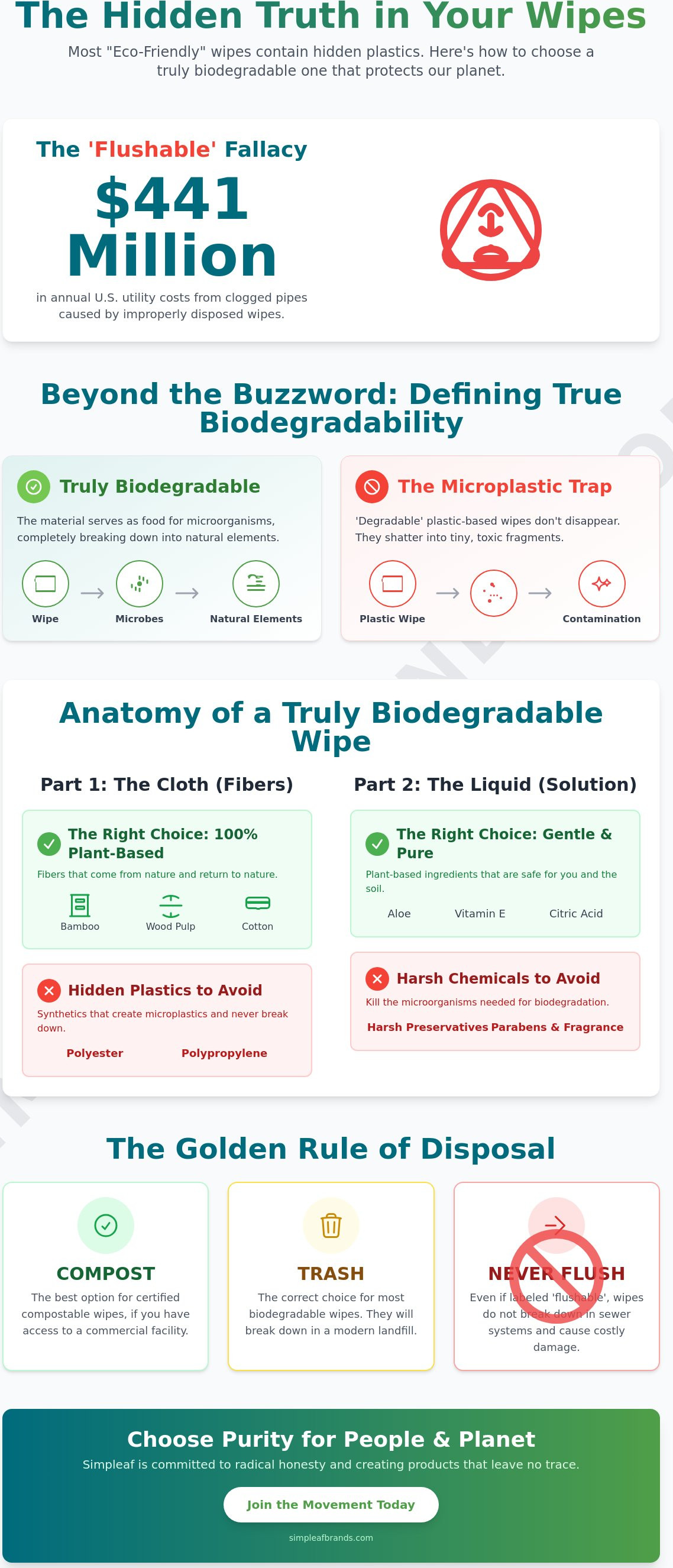
We believe in a Simpleaf approach to transparency and social responsibility. It's time to cut through the confusion of "flushable" versus "compostable" labels that contribute to $441 million in annual U.S. utility costs. This article provides a clear, science-backed checklist for 2026, including a look at ASTM D6400-22 standards and new labeling laws in states like Oregon and Illinois. You'll gain the confidence to choose Simpleaf products that support the planet while keeping your home and body refreshed. Join the movement for a cleaner, kinder world today.
Key Takeaways
- Analyze both the liquid solution and the cloth to understand exactly what makes a wipe truly biodegradable before you buy.
- Spot the "power words" and unverified claims that corporate giants use to hide microplastics in their products.
- Master the "Golden Rule" of disposal so your cleaning routine leaves no trace on our planet's delicate ecosystems.
- Discover why 100% plant-based fibers are the only acceptable choice for a refreshed, guilt-free lifestyle.
- Learn how high-purity ingredients transform a simple daily task into a meaningful contribution to global social missions.
Beyond the Buzzword: Defining True Biodegradability in 2026
The word "biodegradable" has become a heavy-duty marketing shield for brands still clinging to old, plastic-heavy habits. In 2026, we're seeing a refreshing shift where consumers demand honesty over hype, moving away from vague promises toward science-backed proof. To understand what makes a wipe truly biodegradable, you must look at how it ends its life. Many products labeled as "degradable" simply shatter into smaller pieces. This physical fragmentation is not the same as biological breakdown. True biodegradability means the material serves as food for microorganisms, eventually returning to water, CO2, and biomass.
We call this the Simpleaf standard of transparency. It's about being radically honest regarding every fiber we source for our products. While a standard wet wipe might contain hidden polyester or polypropylene, a truly eco-friendly alternative relies on plant-based purity. By 2026 standards, an innocuous product must leave no toxic residue behind. It should integrate back into the earth as seamlessly as it fits into your active lifestyle. When you choose a product that meets these criteria, you aren't just cleaning; you're participating in a larger movement for a healthier planet.
Biodegradable vs. Compostable: The Critical Distinction
It's easy to get these terms mixed up. While every compostable item is biodegradable, the reverse isn't true. Compostable wipes are designed to break down within a specific timeframe under high-heat, microbial-rich conditions found in industrial facilities. If you toss a "biodegradable" wipe into a dry, oxygen-starved landfill, it might sit there for decades without changing. Real sustainability requires understanding these environments so you can dispose of your wipes with a clear conscience, knowing they won't haunt the environment for generations.
The Microplastic Trap: Why 'Degradable' Isn't Enough
Oxo-degradable plastics are a clever trick. They use chemical additives to make plastic break apart faster, but those pieces don't actually disappear; they just become invisible microplastics. These fragments disrupt soil health and contaminate water systems, eventually entering the food chain. The microplastic trap is the primary enemy of true sustainability because it trades a visible waste problem for a permanent, invisible ecological threat. To avoid this, always look for 100% plant-based materials that don't rely on "degradable" plastic shortcuts. Understanding what makes a wipe truly biodegradable means rejecting any material that leaves a trail of synthetic dust in its wake.
The Anatomy of a Truly Biodegradable Wipe
Think of a wipe as a partnership between two distinct halves: the cloth and the liquid. To understand what makes a wipe truly biodegradable, you must look at both. If the cloth is natural but the liquid is toxic, the earth still loses. True sustainability requires a holistic approach where every component respects the planet's natural rhythm. It is about a refreshed feeling that starts with raw materials and ends with a clean conscience.
Manufacturing plays a silent but vital role in this process. We prioritize plastic-free production lines to eliminate the risk of cross-contamination. It doesn't matter if the raw material is pure if synthetic fibers from a previous run sneak into the batch. Sustainable harvesting is the first step, ensuring that the vitality of our forests remains intact long before a single wipe reaches your hand. This commitment to purity ensures that your daily routine supports a larger movement for human and environmental health.
Source Materials: From Bamboo to Wood Pulp
Fiber choice is the foundation of an eco-friendly wipe. Bamboo grows with incredible speed and minimal water, while cotton offers softness but requires more resources. FSC-certified wood pulp serves as the cornerstone of Simpleaf's sustainable hygiene. It provides the strength you need without the hidden plastics found in standard wipes. Many big-box brands blend polyester or polypropylene into their "cloth" to save money. These synthetics never truly disappear. They simply break into microplastics that haunt our waterways for centuries.
The Liquid Solution: Plant-Based Purity
The liquid solution is often the missing piece of the sustainability puzzle. Many wipes use harsh preservatives to extend shelf life, but these chemicals can kill the very bacteria needed for biodegradation. If the "clean-up crew" of microorganisms is destroyed by the liquid, the cloth cannot break down. We advocate for Simpleaf ingredients like aloe, vitamin E, and citric acid. These plant-based cleansers are gentle on your skin and the soil. Choosing fragrance-free and paraben-free options is a win for the environment. It keeps synthetic toxins out of the ground. When you use Simpleaf Body Wipes, you're choosing a solution that follows the FTC's Green Guides for honest, transparent environmental claims. Keep your body refreshed and your planet pure with every swipe.
Decoding the Labels: How to Spot Greenwashing
Walking down the cleaning aisle feels like a test of your ethical integrity. Every package screams "natural" or "earth-friendly," but these power words often lack scientific backing. They are designed to make you feel good without the brand doing the hard work of material sourcing. To understand what makes a wipe truly biodegradable, you have to look past the pretty green leaves and find the data. Many companies use "self-certified" labels that they created in their own marketing departments. These logos have zero third-party oversight and serve only to distract you from hidden plastics.
Price is another tricky indicator. While you might expect to pay more for purity, a high price tag doesn't always guarantee a plastic-free product. Some premium brands spend more on celebrity endorsements than on sustainable fibers. We believe in a simpleaf approach where your money supports actual social impact and environmental health. Transparency is the only way to verify a brand's heart. If they don't share their social mission or their full ingredient list, they aren't being honest with you. A truly refreshed lifestyle requires knowing that your purchase supports both your home and the global community.
Trustworthy Certifications You Should Know
Look for the BPI (Biodegradable Products Institute) seal first. This guarantee means the product has been tested to break down in industrial composting facilities without leaving toxic residues. For home composting, the TUV Austria "OK Compost" certification is the gold standard. It confirms the wipe will disappear in your backyard bin, where temperatures are lower than in industrial plants. If you are looking for the best flushable wet wipes, ensure they meet the "Fine to Flush" standard. This ensures the fibers break apart quickly in moving water, preventing the clogs that cost U.S. utilities $441 million every year.
Red Flags in the Cleaning Aisle
The phrase "contains bamboo" is a classic greenwashing trap. Often, this means the wipe is 70% plastic and only 30% bamboo. Unless it says "100% plant-based" or "plastic-free," it likely contains synthetic binders. Beware of any "biodegradable" claim that doesn't specify a timeframe or environment. A piece of plastic might biodegrade in 500 years, but that doesn't help the planet today. Use a brand's "About Us" page to verify their ethical integrity. A company that cares about what makes a wipe truly biodegradable will proudly show you their supply chain and their commitment to humanity. If the site is vague, your conscience shouldn't be clear.
Proper Disposal: Where Does a Biodegradable Wipe Go?
Disposal is where your eco-friendly intentions meet the real world. Many people assume that a "green" label gives them a pass to leave wipes behind, but we live by a Golden Rule: biodegradable does not mean litter-legal. Understanding what makes a wipe truly biodegradable involves recognizing that the material needs the right environment to disappear. If you drop a plant-based wipe on a hiking trail, it won't vanish overnight. It remains a piece of trash that disrupts the visual beauty of nature and can harm curious wildlife. Your commitment to the planet doesn't end at the checkout; it ends when the product is properly returned to the earth.
The Landfill Paradox is another hurdle for the conscious consumer. Most trash heaps are tightly packed and sealed to prevent leaks. This creates an anaerobic environment where even organic matter struggles to break down. In these conditions, a wipe made of 100% bamboo might last as long as a plastic one. To ensure your purchase supports the planet, follow this hierarchy of disposal:
- Best: Home or industrial composting (for non-flushable, plant-based wipes).
- Better: Flushing (only if the product is certified flushable).
- Last Resort: The trash bin (when no other option is available).
The Septic Tank and Sewer Reality
Knowing what makes a wipe truly biodegradable helps you choose the right disposal path for every situation. Mechanical strength is the main difference between a body wipe and a flushable one. A body wipe needs to be tough so it doesn't tear while you clean. However, that same toughness makes it a nightmare for your plumbing. Simpleaf flushable wipes are engineered with a specific balance; they are strong in your hand but lose their integrity once they hit the moving water of your toilet. This ensures they pass through your septic tank or sewer line without causing the massive clogs that cost U.S. utilities $441 million every year. Never flush a wipe unless the packaging explicitly confirms it is safe for your pipes.
Outdoor Hygiene and 'Leave No Trace'
Burying your hygiene products in the woods is no longer an acceptable practice. Even plant-based body wipes for camping can take months to degrade in the wild, depending on soil moisture and temperature. Always pack it out to keep our trails pristine. If you have a home compost system, you can dispose of your used plant-based wipes there. In a healthy, active compost pile, these fibers typically return to the earth as rich biomass within 180 days. This cycle of purity ensures that your vitality doesn't come at the expense of the environment. Take the guesswork out of your eco-friendly lifestyle. Shop Simpleaf Flushable Wipes for a refreshed home and a protected planet.
The Simpleaf Mission: Purity for People and Planet
Cleaning your skin should never feel like a compromise for the planet. We believe that true vitality comes from a refreshed body and a clear conscience. This is the heart of our mission. We’ve spent the previous sections exploring the science of what makes a wipe truly biodegradable, but the final ingredient isn't found in a lab. It’s found in the values of the company you choose to support. When you reach for our products, you are joining a movement that prioritizes humanity as much as hygiene. Clean skin. Clean planet. No excuses.
The "Simpleaf" adjective describes our entire approach: simple ingredients, effective results, and a straightforward commitment to doing good. It’s about purity in every sense of the word. We apply this standard to our ingredient list and our business ethics alike. By choosing a brand that values transparency, you empower yourself to make a real difference with every swipe. You don't just buy a product; you join a community dedicated to a kinder, cleaner future.
Why We Choose 100% Plant-Based Fibers
Our commitment to 100% plant-based fibers is about more than just breakdown speed. You will notice a distinct tactile difference the moment you use them. Our plastic-free substrate offers incredible strength without the scratchy, synthetic feel of traditional brands. We follow a strict "No Harsh Chemicals" promise. This protects your sensitive skin and ensures that no toxic residues enter the ecosystems we all share. Experience the refreshing feel of a wipe that is as gentle on the earth as it is on your family. It's the ultimate way to stay active while keeping your environmental footprint small.
Our Social Enterprise Model
We believe that hygiene is a fundamental human right. That's why our social enterprise model is inextricably linked to our primary function. A portion of every purchase supports global hygiene initiatives, providing essential tools to underserved communities. This is where the dual application of "purity" truly shines. It describes the physical results of our Simpleaf Baby Wipes and the ethical integrity of our business practices. We invite you to switch to a brand that prioritizes the health of humanity and the environment. Start your journey today with The Essentials Kit and feel the satisfaction of contributing to a greater good. Understanding what makes a wipe truly biodegradable is the first step toward a more empowered, socially responsible lifestyle.
Clean Your World with Confidence
You now have the tools to spot the difference between marketing hype and real environmental integrity. True sustainability isn't just about the fiber; it's about the liquid solution, the manufacturing process, and a brand's heart. By choosing 100% plastic-free substrates and looking for BPI Certified compostable options, you ensure your routine leaves no trace on the planet. Understanding what makes a wipe truly biodegradable gives you the empowerment to clean with a clear conscience while maintaining your active, vibrant lifestyle.
Our mission is simple. We've already donated over 1 million wipes to communities in need because we believe purity belongs to everyone. Your purchase isn't just a transaction; it's an invitation to join a movement for global hygiene and environmental health. It's time to align your daily habits with your values and support a more sustainable future. Switch to Truly Biodegradable Hygiene with Simpleaf and feel the satisfaction of contributing to a greater good. Stay refreshed, stay active, and keep our planet pure for generations to come.
Common Questions About Truly Biodegradable Wipes
How long does it take for a truly biodegradable wipe to decompose?
A truly biodegradable wipe typically takes between 45 and 180 days to decompose in a healthy, active composting environment. This timeframe varies based on moisture, heat, and microbial activity. In a dry landfill, the process slows down significantly because the bacteria needed for breakdown are starved of oxygen. Choosing high-purity materials ensures the wipe returns to nature as quickly as possible once the right conditions are met.
Can I put biodegradable wipes in my backyard compost bin?
You can put 100% plant-based wipes in your backyard bin if they are free from synthetic binders and harsh chemicals. Look for the TUV Austria "OK Compost Home" certification to be certain. Avoid composting wipes used with non-organic cleaners or those used for diaper changes to keep your soil safe for gardening. This simple act of home composting turns your daily cleanup into rich, vital nutrients for your local ecosystem.
Is there a difference between 'plant-based' and 'biodegradable'?
Plant-based refers to where the fibers come from, while biodegradable describes how they break down. A product can be made from plants but processed with synthetic resins that prevent it from returning to the earth. To understand what makes a wipe truly biodegradable, you must verify that both the fiber and the liquid solution are designed to be consumed by microorganisms. We prioritize 100% plant-based purity to ensure a seamless cycle from nature back to nature.
Why are some biodegradable wipes not flushable?
Many biodegradable wipes are too strong to be flushed because they are designed to stay intact during heavy cleaning. Flushable wipes, like our Simpleaf Flushable Wipes, use shorter fibers that lose their strength quickly in moving water. If a wipe doesn't break apart immediately, it can snag on pipes and cause expensive plumbing blockages. Always check the label for "Fine to Flush" certification before tossing any wipe down the toilet.
Do biodegradable wipes expire or lose their effectiveness?
Biodegradable wipes generally have a shelf life of two years before the liquid solution begins to lose its effectiveness. While the fibers themselves don't expire, the plant-based cleansers like aloe and vitamin E can dry out or lose their refreshing qualities over time. Keep your packs sealed tight and store them in a cool place to maintain their vitality. Using your wipes within six months of opening ensures the best experience for your skin and home.
What happens if a biodegradable wipe ends up in the ocean?
Even a pure, plant-based wipe becomes a hazard if it enters the ocean, as saltwater and lower temperatures slow down the biodegradation process. While it won't shatter into permanent microplastics like traditional wipes, it can still harm marine life that mistakes it for food. Proper disposal is the only way to protect our waters. Your commitment to what makes a wipe truly biodegradable must include the responsibility of keeping these products out of our delicate aquatic ecosystems.
Are biodegradable wipes safe for newborn baby skin?
Truly biodegradable wipes are often the safest choice for a newborn's delicate skin because they lack the synthetic fragrances and parabens found in cheaper alternatives. Our Simpleaf Baby Wipes prioritize purity to keep your little one refreshed without irritation. These wipes use gentle, plant-derived ingredients that respect the skin's natural barrier. Choosing these products provides peace of mind for parents who care about their child's comfort and the health of the planet.