
Chemical Free Cleaning: The 2026 Guide to a Non-Toxic Home and Lifestyle
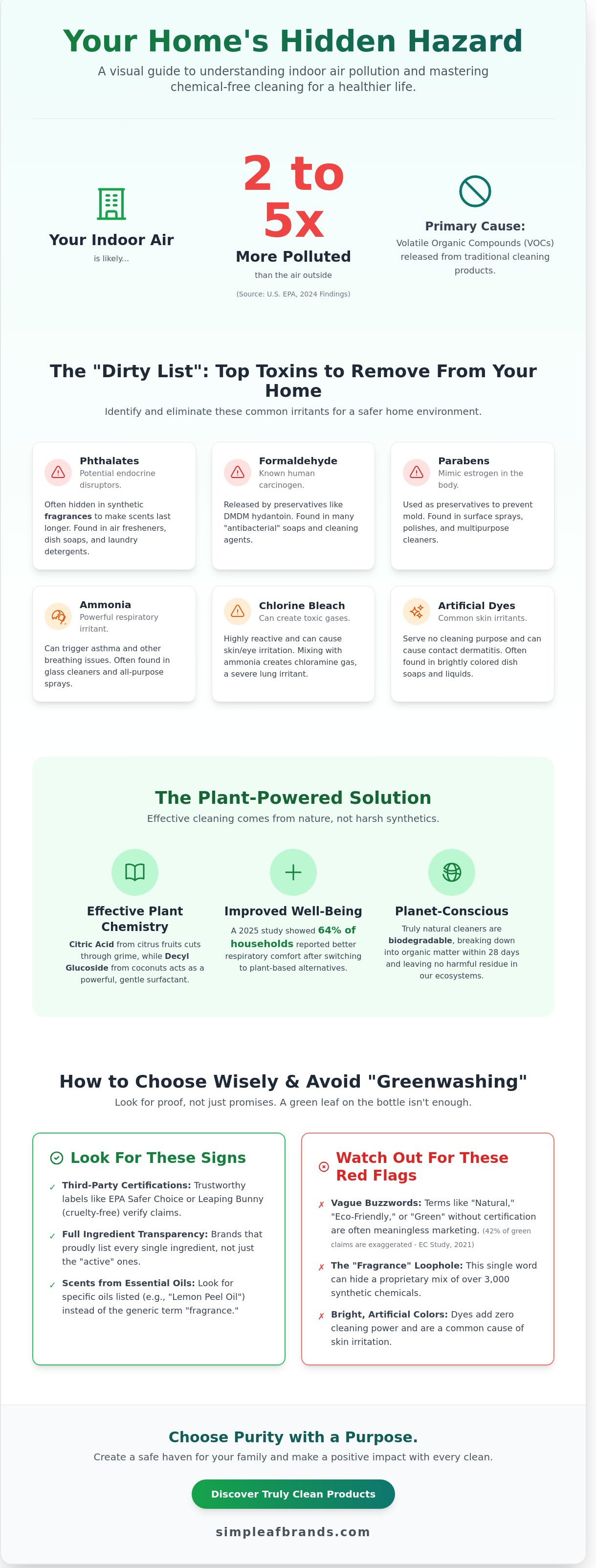
Your indoor air is likely 2 to 5 times more polluted than the air outside, according to the EPA’s 2024 findings. Much of this stems from traditional sprays and wipes, making chemical free cleaning a necessity for a truly healthy home. You want a safe haven for your family, but "greenwashing" labels often hide harsh VOCs that cause real respiratory distress. It’s frustrating when your attempt at a healthy lifestyle leads to a headache instead of a fresh start.
We believe hygiene should be a force for good, not a health risk. This guide helps you eliminate synthetic irritants by using plant-based alternatives that actually work on tough grime. You'll discover exactly which 12 toxins to avoid, follow a simple room-by-room transition plan, and find a brand that supports your ethical values. It’s about creating a safe space for your family while making a global impact through every choice you make. Your routine should be effective, kind, and sustainable. It’s simple as that.
Key Takeaways
- Understand the difference between harsh synthetics and plant-based power to master chemical free cleaning in your home.
- Identify hidden toxins and clear the air by removing VOCs and synthetic fragrances from your daily routine.
- Discover how plant-derived surfactants and citric acid cut through grime without the need for irritating fumes.
- Follow a simple, room-by-room guide to transition your home to a non-toxic lifestyle with ease.
- Choose purity with a purpose by opting for transparent ingredients that protect your family and the planet.
What Does Chemical Free Cleaning Actually Mean?
When you hear the term chemical free cleaning, your mind likely drifts to a home that smells like fresh lemons rather than a sterile laboratory. It is a phrase that represents a feeling of safety and a commitment to health. By 2026, the cleaning industry has fully embraced this term to signal the total absence of harsh, petroleum-based synthetics. While scientists will tell you that even pure water is a chemical, the modern consumer uses this language to demand purity and transparency. It is about choosing products that work with nature instead of against it.
The rise of plant-derived chemistry in 2026 has changed how we stock our cabinets. We are seeing a massive shift toward ingredients like citric acid from citrus fruits and decyl glucoside from coconuts. Understanding the labels is the first step toward a safer home. Here is how to tell the difference between the common buzzwords:
- Natural: Ingredients sourced directly from plants, minerals, or animals.
- Non-toxic: A formula that does not cause adverse health effects in humans or pets under normal use.
- Biodegradable: Substances that break down into organic matter within 28 days, leaving no harmful residue.
The Myth of the "Chemical-Free" Molecule
Everything in your home has a molecular structure. Your favorite vinegar and water solution is technically a mixture of acetic acid and H2O. The real goal is not to avoid molecules, but to avoid persistent bioaccumulative toxins (PBTs). These substances stay in the environment and our bodies for years. Green cleaning methods prioritize ingredients that rinse away cleanly without lingering in the ecosystem. To find true "clean" chemistry, look for the EPA Safer Choice label or the Leaping Bunny seal. It's simple as that.
Why We Are Moving Away from Harsh Synthetics
Traditional cleaners often compromise the air you breathe. The EPA reports that indoor air can be 2 to 5 times more polluted than outdoor air. Much of this pollution comes from volatile organic compounds (VOCs) found in synthetic sprays. These fumes can trigger asthma or irritate sensitive skin. In 2025, a consumer study showed that 64% of households reported better respiratory comfort after switching to plant-based alternatives. Choosing chemical free cleaning isn't just about a sparkling countertop. It's about protecting your family's health and reducing the chemical runoff that reaches our oceans. It's a small change that makes a massive impact on the planet.
The "Dirty List": Toxins to Remove from Your Home
Your home should be a sanctuary, not a source of stress. Achieving a true chemical free cleaning routine starts with knowing exactly what you're up against. Many traditional cleaners rely on harsh synthetics that linger in the air and on surfaces long after the scrubbing is done. In fact, EPA studies indicate that indoor air levels of many pollutants are regularly 2 to 5 times higher than outdoor levels. This makes identifying the "Dirty List" of toxins your first step toward a fresher, safer lifestyle.
Volatile Organic Compounds (VOCs) are the most common offenders. These gases evaporate at room temperature from paints, disinfectants, and even air fresheners. They don't just disappear; they circulate. Ammonia and chlorine bleach are also losing their place in modern homes. These substances are respiratory irritants that can trigger asthma or skin reactions. In 2023 alone, U.S. poison control centers managed over 6,000 cases involving bleach-related incidents. Transitioning to chemical free cleaning means moving away from these aggressive liquids toward solutions that respect your health and the planet.
- Phthalates: Often hidden in synthetic fragrances to make scents last longer. They're known endocrine disruptors.
- Formaldehyde-releasers: Preservatives like DMDM hydantoin slowly leak formaldehyde, a known carcinogen, into your living space.
- Parabens: Used to prevent mold growth but can mimic estrogen in the body.
Hidden Dangers in Fragrances and Dyes
The "fragrance loophole" is a major hurdle for conscious consumers. Under the 1973 Fair Packaging and Labeling Act, companies can list "fragrance" as a single ingredient while hiding a cocktail of 3,000 different chemicals. These undisclosed mixtures often lead to unexplained headaches or skin flare-ups. Artificial dyes are equally problematic, serving no functional purpose other than aesthetic appeal. They frequently cause contact dermatitis on sensitive skin. Choose scents derived from pure essential oils instead. They offer a crisp, natural aroma that uplifts your mood without compromising your lungs. It's a simple swap with a massive impact.
How to Spot Greenwashing in 2026
Marketing can be deceptive. A bottle with a green leaf and the word "natural" doesn't guarantee safety. A 2021 European Commission study found that 42% of green claims were exaggerated or outright false. To avoid the trap, look for verified third-party labels. The EPA Safer Choice program provides a reliable standard for identifying products with safer chemical ingredients. You should also look for the Environmental Working Group (EWG) Verified seal. Truly clean products have ingredient lists that are easy to read and understand. If you can't pronounce it, you probably don't want it on your kitchen counter. Switching to plant-based hygiene solutions ensures your cleaning routine is as honest as it is effective. Simple as that.
The Plant-Based Framework: How Natural Cleaners Work
Nature is efficient. Plants have spent millions of years developing defense mechanisms to stay healthy. We simply bottle that power. Choosing chemical free cleaning solutions doesn't mean you're settling for less. It means you're using smart science to achieve a fresh, safe environment. Plant-based formulas leverage the biological reality of how dirt and bacteria behave. They don't just mask odors. They dismantle the mess at a molecular level.
Citric acid and vinegar are the workhorses for mineral buildup. Citric acid, found in citrus fruits, acts as a natural chelating agent. It binds to calcium and lime, making it easy to wipe away hard water spots. Vinegar cuts through alkaline grime with ease. For organic messes like food or pet stains, enzymes take the lead. These biological catalysts, such as protease and lipase, act like tiny scissors. They shred proteins and fats into smaller pieces that water can carry away. It's high-performance cleaning that stays gentle on your home.
Surfactants: The Heavy Lifters of Clean
Surfactants are the reason soap bubbles. They lower the surface tension of water, allowing it to soak into surfaces rather than bead up. Traditional cleaners often rely on sodium lauryl sulfate (SLS), which can irritate skin and eyes. We prefer botanical surfactants derived from coconut and corn. These ingredients are just as effective at grabbing dirt and lifting it away from your floors or counters.
- Biodegradability: Botanical surfactants are highly sustainable. Many plant-based options meet OECD 301B standards, meaning they biodegrade by 60% or more within 28 days.
- Safety: Corn-derived decyl glucoside is mild enough for sensitive skin but tough enough for greasy stovetops.
- Efficiency: You get a deep clean without the lingering fumes of petroleum-based suds.
Natural Disinfection vs. Traditional Sanitizers
Disinfecting your space shouldn't require a gas mask. Many people think they need bleach to kill germs, but botanical alternatives are incredibly potent. Thymol, an oil extracted from thyme, is a heavy hitter in the world of hygiene. It pierces the cell walls of bacteria and viruses, neutralizing them on contact. When choosing safer cleaning products, look for these EPA-registered botanical actives that provide peace of mind without the toxic residue.
A botanical disinfectant is a plant-derived substance that kills 99.9% of germs without toxic residue. Use these for high-touch areas like doorknobs and remote controls. For daily maintenance, a simple plant-based multi-surface spray keeps your home fresh and inviting. It's about using the right tool for the job. You protect your family, and you protect the planet. Every time you clean, you're making an impact. It's about hygiene with a heart. Simple as that.
The movement toward chemical free cleaning is growing because the results are undeniable. Modern plant-based cleaners perform just as well as their synthetic counterparts in independent laboratory tests. You get the same shine and the same germ-killing power. The only thing you lose is the risk of harsh exposure. Clean your home. Empower your lifestyle. Wipe for a Cause and feel the difference of a truly natural clean.
A Simple Room-by-Room Transition Guide
Transforming your home doesn't require an overnight overhaul. It's a journey that happens one space at a time. By breaking the process into manageable phases, you ensure your transition to chemical free cleaning is sustainable and stress-free. Start where you spend the most time or where food is prepared to see the immediate benefits of a non-toxic environment.
- Phase 1: The Kitchen. Focus on food-contact surfaces. Since 2023, studies have indicated that traditional degreasers often leave residues that can transfer to your meals. Swap these for plant-based soaps and distilled vinegar to keep your prep areas truly pure.
- Phase 2: The Bathroom. Tackle mold and mildew naturally. Humidity creates a breeding ground for spores, but harsh bleach isn't the only solution. Citric acid and hydrogen peroxide effectively break down grime without irritating your respiratory system.
- Phase 3: The Living Areas. Improve air quality and control dust. According to 2025 EPA data, indoor air can be five times more polluted than outdoor air. Use damp, natural fiber cloths to trap dust rather than circulating it with synthetic sprays.
- Phase 4: Personal Hygiene. Your skin is your largest organ and absorbs what you apply to it. Extend your "clean" philosophy by choosing body wipes and soaps derived from nature. It’s about feeling refreshed without the hidden synthetics.
Safe Surfaces: Kitchen and Bathroom Mastery
Ditch the ammonia-filled blue liquids for streak-free, plant-based sprays that leave mirrors and windows sparkling. For high-touch areas like faucets and cabinet handles, non-toxic wipes provide a quick, effective way to manage spills. These small changes significantly reduce your daily toxic load. Learn how to master these swaps in Simpleaf: The Complete Guide to Sustainable Hygiene and Home Care. Simple as that.
Chemical-Free Cleaning on the Move
Your commitment to a healthy lifestyle shouldn't end at your front door. The gym, the office, and public transit are filled with surfaces treated with aggressive industrial chemicals. Portable hygiene kits allow you to maintain your standards wherever you go. When you choose conscious products for your commute, you support your health and our Wipe for a Cause mission. Check out The Ultimate Hygiene Kit: Everything You Need for Cleanliness on-the-go to stay prepared for any journey.
Ready to refresh your home and your habits? Shop Simpleaf’s plant-based essentials and join the movement toward a cleaner, kinder world.
Choosing Simpleaf: Purity with a Purpose
Our commitment extends beyond the bottle. We've designed our range to be biodegradable and plastic-free to combat the 8 million tons of plastic that enter our oceans annually. By removing petroleum-based surfactants and synthetic fragrances, we ensure your cleaning routine leaves no trace on the environment. Choosing Simpleaf means protecting your family today and the planet for the next generation. It's a straightforward choice for a sustainable lifestyle.
Simple Ingredients, Real Results
Don't let the gentle labels fool you. Our multipurpose and glass cleaners cut through grime and streaks with professional-grade power. We use botanical extracts that are tough on dirt but safe for the most sensitive skin. Whether you're wiping down a high chair or polishing a mirror, our wipes offer peace of mind. They're crafted to be hypoallergenic, ensuring that even the most reactive skin remains irritation-free. Our wipes are 100% compostable, breaking down naturally rather than sitting in a landfill for centuries. Discover more about our commitment to the planet in our Plastic Free Products: The Ultimate Guide to Sustainable Living in 2026.
Join the Movement for a Cleaner World
Every purchase you make fuels our "Wipe for a Cause" mission. We believe hygiene is a basic human right, not a luxury. That's why a portion of every sale supports hygiene access in underserved communities across the globe. Since our inception, we've focused on turning a daily chore into a social impact engine. When you clean your home, you're helping a child stay healthy or providing dignity to someone in need. It's a simple approach to a complex global problem.
- 100% Plant-Derived: Ingredients sourced from nature, not a lab.
- Plastic-Free Packaging: Reducing waste with every shipment.
- Direct Social Impact: Supporting global hygiene partnerships with every purchase.
The satisfaction of a clean home feels better when you know it's doing good. Embrace a lifestyle that values transparency and compassion. It's time to make chemical free cleaning the standard for your household, one wipe at a time. Join us in making the world a bit brighter and a lot cleaner. It's simple as that.
Embrace a Fresher Future Today
Transitioning your home to a non-toxic sanctuary shouldn't feel like a chore. You've identified the "Dirty List" of toxins that the Environmental Working Group identifies in over 2,000 common household cleaners. By following a room-by-room framework, you can successfully swap out harsh irritants for effective, plant-based alternatives. Committing to chemical free cleaning is a powerful step toward protecting your family and the environment. It's a choice that feels good because it's genuinely better for your well-being.
At Simpleaf, we prioritize purity with a purpose. Our products are 100 percent plant-based and non-toxic, featuring transparent labels you can actually read. We believe hygiene should be accessible to everyone. That's why we Wipe for a Cause, where every purchase supports global hygiene access initiatives. We've built our brand on the idea that social responsibility and high-performance hygiene go hand in hand. It's simple as that.
Shop the Home Cleaning Bundle for a naturally fresh start.
You're ready to breathe easier and enjoy a space that's truly clean. Welcome to your new, refreshed lifestyle.
Frequently Asked Questions
Is chemical free cleaning as effective as using bleach?
Yes, chemical free cleaning is highly effective for maintaining daily household hygiene. The CDC reports that simple soap and water remove 99% of germs from surfaces. For deeper disinfection, 5% acidity white vinegar kills 82% of mold species and many common bacteria. You don't need harsh bleach to keep your family safe. It is about using nature's tools to create a fresh, healthy environment. Simple as that.
What are the most dangerous chemicals to avoid in household cleaners?
Avoid phthalates, ammonia, and sodium hypochlorite to protect your indoor air quality. The Environmental Working Group (EWG) found in a 2023 report that 53% of cleaning products contain ingredients that damage the lungs. These toxins often hide behind the vague word "fragrance" on labels. Choosing products with transparent ingredient lists ensures your home stays truly clean. We believe hygiene should protect your health, not compromise it.
Can I make my own chemical-free cleaners at home?
You can easily create effective solutions using basic pantry staples like baking soda and distilled vinegar. A 2022 study in the Journal of Environmental Health confirmed that 5% acetic acid vinegar effectively eliminates E. coli. Mix one part water with one part vinegar for an all-purpose spray. It's a sustainable way to embrace chemical free cleaning while reducing plastic waste. Making the switch is simple and empowering for any household.
Are plant-based cleaners safe for pets and children?
Most plant-based cleaners are significantly safer, but you must still check for specific botanical irritants. The ASPCA noted a 15% rise in pet poisoning calls related to household cleaners since 2020. Avoid products containing high concentrations of tea tree oil or pine oil, which can be toxic to cats. We prioritize gentle, biodegradable ingredients to keep your little ones and furry friends moving safely through a refreshed home.
How do I know if a product is truly non-toxic or just greenwashed?
Look for third-party certifications like the EPA Safer Choice or EWG Verified seals to avoid deceptive marketing. The EPA currently certifies over 2,000 products that meet strict human health and environmental criteria. If a label uses vague terms like "earth-friendly" without a verified logo, it might be greenwashed. Transparency is the heart of ethical business. We believe in being honest about every ingredient we use in our mission.
Do chemical-free cleaners have a shorter shelf life?
Natural cleaners typically stay effective for 6 to 12 months because they lack synthetic preservatives. Citric acid and potassium sorbate provide stability for about 365 days in most plant-based formulas. Always check for a manufacture date or a small open-jar icon on the packaging. Fresh ingredients work best to keep your surfaces sparkling and your conscience clear. It's a simple way to ensure your home stays healthy.
Are all essential oils safe for use in natural cleaning products?
Essential oils require careful handling because some can cause skin irritation or respiratory distress in sensitive individuals. While lavender is generally safe, tea tree oil is toxic to dogs and cats at concentrations exceeding 1%. Always research the specific oil before adding it to your DIY routine. We use carefully balanced, natural scents to ensure your space feels refreshed without any hidden risks to your family's comfort.
What is the best way to start transitioning to a non-toxic home?
Start by replacing your most frequently used product, such as your daily surface wipe or all-purpose spray. A 2023 indoor air quality study found that swapping just 3 toxic cleaners can reduce indoor pollutants by 40%. It's a small step that makes a massive impact on your environment. Join our movement and Wipe for a Cause to start your journey toward a clean, non-toxic lifestyle today.