
Biodegradable Wipes: The Ultimate 2026 Guide to Sustainable Hygiene
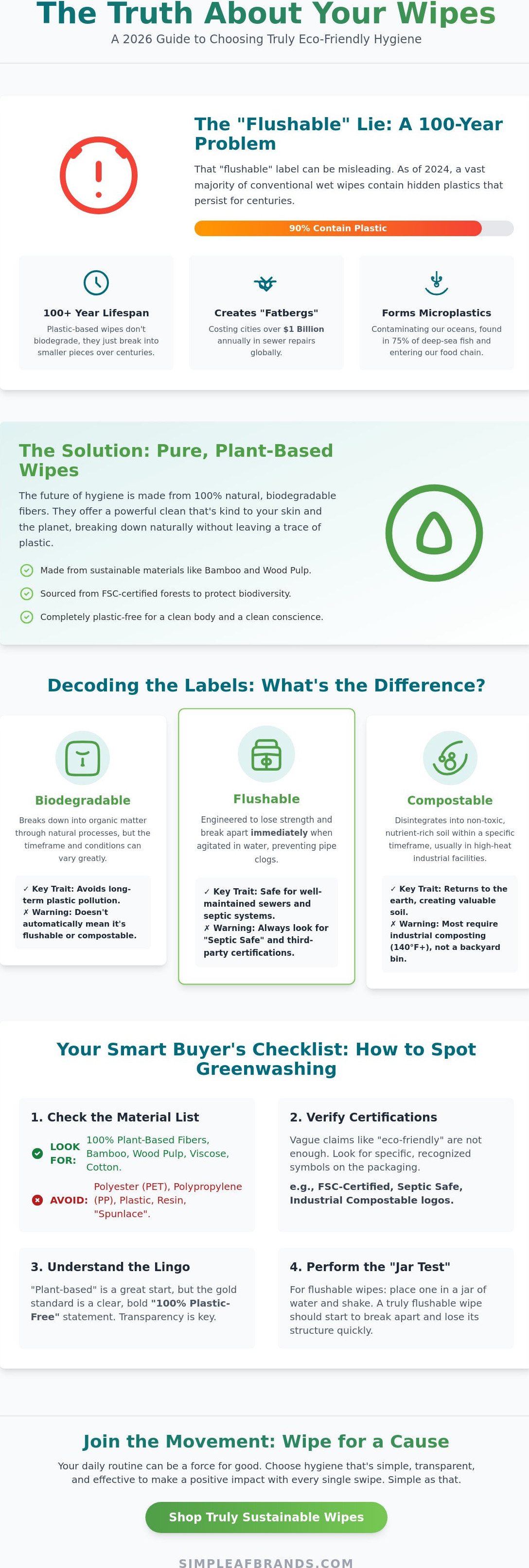
That "flushable" label on your current pack might be a 100 year lie for our oceans. With 90% of conventional wet wipes still containing hidden plastics as of 2024, your daily refresh could be leaving a permanent mark on the planet. You deserve a clean that feels good and does good. It’s frustrating to try to do the right thing only to end up with a product that falls apart or clogs a sewer line. We understand that you want to stay fresh while protecting the world we all share.
We believe hygiene should be simple, transparent, and effective. This guide helps you discover the truth behind biodegradable wipes so you can choose products that are actually kind to your skin and the earth. You'll learn the specific differences between materials like bamboo and viscose, giving you the power to avoid greenwashing. We’ll provide the clear criteria you need to shop with total confidence and join a movement where you can truly Wipe for a Cause. It’s about making a positive impact with every single swipe. Simple as that.
Key Takeaways
- Uncover the hidden plastics in traditional hygiene and learn why natural fibers are essential for a cleaner 2026.
- Decode the labels to understand the vital differences between flushable, compostable, and biodegradable wipes for your home.
- Master the buyer’s checklist to spot greenwashing and identify the specific certifications that guarantee a truly plastic-free clean.
- Discover how pure, plant-based ingredients make sustainable living easy and refreshing for your skin and the planet.
- Join a movement that turns your daily routine into a force for good—it’s as simple as that.
What Are Biodegradable Wipes and Why Do They Matter in 2026?
Biodegradable wipes are hygiene essentials crafted from natural fibers like wood pulp, cotton, or bamboo. Unlike traditional options, these materials break down into organic matter through the work of microorganisms. By 2026, this distinction is no longer a luxury. It's a necessity for a planet reaching its plastic limit. For decades, the industry relied on a hidden secret: most products were actually plastic. Research into the composition of wet wipes shows that up to 80% of conventional wipes consist of synthetic resins like polyester or polypropylene. These materials don't disappear. They simply fragment into smaller, more persistent pieces.
2026 marks a global pivot point for the industry. New regulations are sweeping across regions, including the UK’s comprehensive ban on plastic-based single-use wipes and similar legislative pushes in several U.S. states. We've seen the damage caused by delay. "Fatbergs"—massive, congealed masses of grease and non-biodegradable wipes—clog city sewers and cost municipalities over $1 billion annually in global repair bills. Choosing biodegradable wipes isn't just about personal health. It's about infrastructure survival. It's about taking responsibility for what we leave behind.
The Environmental Cost of Conventional Wipes
Conventional wipes leave a toxic legacy that lasts for centuries. When plastic wipes enter our oceans, they degrade into microplastics. These tiny particles are now found in 75% of deep-sea fish, eventually reaching our own dinner tables. Shipping these products adds to the burden. Heavy, water-logged plastic wipes require significant fuel to transport, creating a massive carbon footprint. We can't afford the "out of sight, out of mind" strategy anymore. The waste we flush today returns to us tomorrow through the food chain and contaminated water systems.
The Rise of Plant-Based Hygiene
People want better for their skin and their homes. There's a powerful shift toward non-toxic, chemical-free personal care that respects the body. This movement prioritizes sustainable sourcing, such as FSC-certified forests that protect biodiversity and prevent illegal deforestation. Simpleaf leads this transition by focusing on clean, simple ingredients. We believe hygiene should be high-performing and heart-centered. Our mission is to provide on-the-go freshness that empowers you to do good. Every time you use our products, you're part of our Wipe for a Cause movement. It's about a clean body and a clean conscience. Simple as that.
Biodegradable vs. Flushable vs. Compostable: Clearing the Confusion
Labels can be tricky. Words like "green" or "natural" often mask the technical reality of how a product breaks down. The term biodegradable is a broad umbrella. It simply means a material can be decomposed by bacteria or other living organisms. It doesn't specify a timeframe or a specific environment. Some biodegradable wipes might take months or even years to vanish if they end up in a dry, oxygen-starved landfill. Understanding how the FDA regulates wipes is a great first step in realizing that marketing claims don't always equal disposal instructions. Simple, honest hygiene starts with knowing exactly where your wipe goes after use.
- Biodegradable: Breaks down eventually, but requires specific environmental conditions.
- Flushable: Must lose its physical strength almost immediately when agitated in water.
- Compostable: Disintegrates into non-toxic, nutrient-rich soil within a set period.
When "Flushable" Actually Means Safe
Safety in the bathroom comes down to dispersibility. This is the science of how fast a wipe loses its strength in water. A truly safe wipe should begin to break down the moment you flush. By 2026, industry standards have become much stricter to prevent "fatbergs" from clogging city sewers. If a wipe stays whole in your pipes, it's a problem. Septic tank owners need to be even more careful. Your system relies on a delicate balance of bacteria; it isn't a trash can. For a deeper look at what to look for, check out our guide on the Best Flushable Wet Wipes of 2026: A Guide to Guilt-Free Hygiene. If it doesn't say "Flushable" and "Biodegradable" on the pack, don't let it touch the water. Simple as that.
Can You Actually Compost Your Wipes?
Composting is a beautiful way to give back to the earth, but not all biodegradable wipes belong in your garden. There's a big difference between home composting and industrial facilities. Industrial sites reach temperatures above 140 degrees Fahrenheit, which is hot enough to break down tougher plant-based fibers. Most backyard bins never get that warm. Look for the "OK Compost Home" seal if you plan to use your own bin. Even then, think about what's on the wipe. Body and feminine wipes often carry human pathogens. These should never go in a compost pile that you use for food or flowers. Keep it clean and keep it safe. Most personal care wipes should head to the trash to protect your local ecosystem. If you want to make a positive impact on the planet, choosing the right disposal method is just as important as the product itself.
Material Science: Bamboo, Viscose, and Hidden Plastics
Choosing the right cloth starts with understanding what goes into it. Most people assume a wipe is just fabric. In reality, it's a complex blend of fibers. Viscose, often called rayon, comes from harvested wood pulp. It's a favorite for its incredible softness and high absorbency. It feels great on sensitive skin and typically breaks down naturally in about 28 days under the right composting conditions.
Bamboo is another powerhouse for sustainable hygiene. It's one of the fastest growing plants on Earth, capable of growing 35 inches in a single day. It requires no pesticides and very little water compared to other crops. However, the chemical process used to turn bamboo into fiber matters. We prioritize closed-loop systems that recycle water and solvents to keep the process clean. Cotton is a natural choice too, but it's thirsty. Conventional cotton can require up to 10,000 liters of water to produce just one kilogram of fiber, making organic options the only responsible path for cotton-based products.
The biggest threat to your eco-friendly goals is the hidden plastic trap. Many brands market "natural fiber" cloths that actually use 15% to 20% plastic binders like polypropylene to keep the wipe from falling apart. These microplastics stay in the soil for centuries. True biodegradable wipes must be free of these invisible synthetics. We believe in total transparency. If it isn't 100% plant-based, it isn't truly clean. Simple as that.
Why We Choose 100% Plant-Based Fibers
Cellulose-based fibers are a win for your skin and the planet. They lock in moisture naturally without the need for harsh chemical fixatives. This keeps your skin hydrated and refreshed during every use. By ditching synthetic fragrances and preservatives that linger in the environment, you ensure your hygiene routine leaves no trace. For a deeper dive into skin-safe options, read The Ultimate Guide to Biodegradable Face Wipes: Clean Skin Without the Plastic Waste. It's a clean choice for a clean conscience.
Durability vs. Degradability
You don't have to sacrifice strength for sustainability. High-quality biodegradable wipes use embossing, a textured 3D pattern, to increase surface area and scrubbing power. This mechanical strength means the wipe won't tear during heavy-duty use. While a 60 GSM (grams per square meter) thickness provides a premium feel, going too thick can actually slow down the breakdown process in some environments. We focus on finding that perfect balance between durability and the ability to return to the earth quickly. It's about performance that respects the planet.
The Buyer’s Checklist: How to Spot Greenwashing
Don't let clever marketing fool you. Finding genuine biodegradable wipes requires a sharp eye and a bit of skepticism. Many brands use the word "natural" to hide the fact that their products contain hidden plastics or harsh synthetics. Real sustainability is transparent. It's about honesty from the forest to your front door. Follow this quick checklist to ensure your purchase actually supports the planet.- Demand "Plastic-Free" labels: If a package says "natural fibers" but doesn't explicitly state it's plastic-free, it likely contains polyester or polypropylene.
- Audit the ingredients: Avoid wipes containing parabens, sulfates, or phthalates. These chemicals don't just sit on your skin; they enter our water systems.
- Verify the breakdown: Look for the ASTM D5511 designation. This specific test proves the material will actually decompose in landfill conditions.
- Check for PETA Cruelty-Free logos: Compassion for the earth must include compassion for the animals living on it.
Deciphering the Labels
Reading a label shouldn't feel like solving a puzzle. Look for the FSC (Forest Stewardship Council) logo first. This certification guarantees the wood pulp used in your biodegradable wipes comes from responsibly managed forests that provide environmental, social, and economic benefits. Next, check for the Green Seal. This is a premier standard for health and sustainability. Products with this seal meet rigorous performance requirements while minimizing their footprint. Finally, seek out the ASTM D5511 standard. This testing method determines the degree of anaerobic biodegradation in high-solids anaerobic-digestion conditions. Without this, a "biodegradable" claim is often just a guess.Transparency and Brand Ethics
A brand that cares about the planet won't hide its homework. Truly sustainable companies disclose their full ingredient lists online for everyone to see. They don't just focus on the wipe; they focus on the whole package. Check if the outer wrap is recyclable or made from post-consumer recycled materials. Your choice matters. When you buy with intention, you join a movement that prioritizes people over profits. You can learn more about these standards in Simpleaf: The Complete Guide to Sustainable Hygiene and Home Care. We believe in being clean in every sense of the word. It's about physical hygiene and ethical business practices combined. Keep your routine fresh and your conscience clear. Simple as that.Simpleaf: Wiping for a Cause and a Cleaner Planet
Cleanliness shouldn't be complicated. At Simpleaf, we believe that staying fresh and protecting the planet can happen at the same time. Our 100% plant-based, biodegradable wipes offer a high-performance solution that respects your body and the environment. We've stripped away the harsh chemicals and confusing jargon. Instead, we focus on what matters: pure ingredients, honest labels, and effortless use. It's a straightforward approach to a cleaner life. Simple as that.
We designed our products for people who care about their footprint. Our wipes are fully flushable and break down quickly, preventing the clogs that plague city sewers. By choosing these materials, we ensure that your hygiene routine doesn't leave a lasting scar on the earth. We're moving toward a zero-waste lifestyle, one wipe at a time, and we want you to join us on this journey. Our commitment to 100% transparency means you'll always know exactly what you're putting on your skin.
Hygiene with a Heart
Our mission goes far beyond the bathroom. We believe in ethical cleanliness, where the quality of our business practices matches the quality of our products. This is why we launched our signature Wipe for a Cause program. Every time you purchase our biodegradable wipes, you're directly supporting hygiene access in underserved communities. Since our inception, we've donated thousands of packs to those in need, because dignity shouldn't be a luxury reserved for a few.
Access to clean water and soap remains a global challenge. We've partnered with organizations to ensure our donations reach the people who need them most during crises and daily life. You can explore the details of our impact in Personal Wipes Flushable: A Case Study in Sustainable Hygiene for 2026. When you choose Simpleaf, you're choosing to be part of a compassionate community that values human health everywhere. It's about doing good while feeling good.
Sustainable Hygiene for Your Active Lifestyle
Modern life is mobile. You're constantly moving between the office, the gym, and the great outdoors. You need hygiene that keeps pace with your schedule without creating a mountain of plastic waste. Our travel-ready packs provide the ultimate convenience without the environmental guilt. They're compact, durable, and ready for any adventure you have planned for 2026 and beyond. Integrating sustainable habits into your daily routine is easy when the performance is this reliable.
- Keep a pack in your commute bag for a quick refresh before meetings.
- Stash them in your hiking gear for eco-friendly trail hygiene that leaves no trace.
- Use them at home for a non-toxic, skin-safe cleaning experience for the whole family.
Performance matters just as much as the planet. Our wipes are tough on dirt but soft on skin, using natural botanicals to leave you feeling refreshed and empowered. You're not just buying a product; you're investing in a cleaner future for yourself and the community. Shop Simpleaf Flushable Wipes and start your impact today. It's time to embrace a lifestyle that's as fresh as it is responsible. Simple as that.
Step Into a Fresher, Greener 2026
Choosing the right hygiene products shouldn't feel like a chore. By 2026, the demand for transparency has made it clear that FSC-certified plant-based fibers are the gold standard for sustainability. You've learned how to decode labels to avoid hidden plastics and why Green Seal certified performance matters for your daily routine. It's about feeling fresh while knowing your choices support a clean, ethical future for the planet. We've built a path that replaces chemical jargon with pure, simple results. High-quality hygiene is now accessible to everyone on the move.
At Simpleaf, we believe every small action creates a lasting impact. Our biodegradable wipes offer a premium experience that respects both your skin and the earth. When you choose us, you're not just buying a product; you're supporting our Wipe for a Cause social mission that brings hygiene to those in need. It's high-performance care with a heart. Simple as that.
Shop our 100% plant-based, biodegradable wipes and join the movement.
You have the power to change the world one swipe at a time. Let's make 2026 the year we leave the waste behind and embrace a cleaner way of living together.
Frequently Asked Questions
Are biodegradable wipes really better for the environment?
Yes, they're a massive win for the planet because they don't leave behind microplastics. Traditional wipes made of polyester or polypropylene can sit in landfills for 100 years. Choosing biodegradable wipes ensures your hygiene routine supports a circular economy. It's about feeling fresh while keeping the Earth clean. Simple as that.
How long does it take for a biodegradable wipe to decompose?
Most plant based wipes decompose within 28 to 45 days under industrial composting conditions according to ISO 14855-1 standards. This is a 99 percent faster rate than standard synthetic options that linger for centuries. We use materials like bamboo or FSC-certified wood pulp that return to the soil quickly. You get a reliable clean that doesn't haunt the environment for decades.
Can I flush biodegradable wipes down the toilet?
You shouldn't flush them unless the packaging explicitly carries the IWSFG 2023 certification seal. Even though they're biodegradable, many don't break down fast enough to clear older plumbing systems. Stick to the trash bin for standard wipes to avoid a 500 dollar plumbing bill. Stay fresh on the go and dispose of them responsibly to keep our local waterways clear.
What is the difference between biodegradable and compostable wipes?
Biodegradable means the material breaks down through natural processes, while compostable wipes must turn into nutrient-rich soil within 180 days. All compostable products are biodegradable, but not all biodegradable items meet the ASTM D6400 standard for composting. Our goal is a clean conscience and a clean home. Choosing the right label helps you manage your waste with total transparency.
Do biodegradable wipes contain plastic?
True biodegradable wipes contain 0 percent petroleum-based plastics like polyester or polyethylene. They're crafted from renewable plant fibers such as bamboo or organic cotton. This prevents the release of microplastics into our oceans, which currently affect 700 marine species. You get a soft, durable texture without the hidden synthetic chemicals. It's a simple, sustainable choice for your daily movement.
Are biodegradable wipes safe for sensitive skin?
Yes, they're often the best choice for sensitive skin because they avoid harsh synthetic preservatives found in plastic alternatives. Many eco-friendly options use 99 percent water and plant extracts like aloe or chamomile. We skip the parabens and sulfates that cause irritation for 1 in 3 adults. Your skin feels refreshed and calm. It's hygiene with a heart, designed for every body.
Can I use biodegradable wipes for potty training?
Absolutely, they're a perfect companion for your toddler's potty training journey. These wipes offer the strength needed for messy moments while staying gentle on delicate skin. Since the average child uses 2,500 wipes before they're trained, switching to a sustainable option makes a huge impact. Keep a pack in your bag for easy, on-the-go cleanups. It's a win for your family and the future.
What certifications should I look for when buying eco-friendly wipes?
Look for the FSC logo to ensure the fibers come from 100 percent responsibly managed forests. The OK Compost Home certification is another gold standard, proving the wipe breaks down in your backyard bin. These labels offer total transparency about the product's lifecycle. Don't settle for vague claims. Demand verified proof so your purchase can truly Wipe for a Cause.